What Do Professionals Look For in a Show Jumper? | Sport Horse Purchase Advice
Discover how professionals evaluate a show jumper. Learn what experts look for in canter, jumping technique, character, health, bloodlines, and rideability.
What Do Professionals Look For in a Show Jumper? This is how experts evaluate a future sport horse
A professional eye often sees much more than just a beautiful jump. While a novice buyer primarily looks at appearance or a clear round, an experienced rider, trainer, or horse dealer assesses the complete picture. It is precisely the combination of technique, character, health, and potential that determines whether a show jumper can develop into a successful sport partner.
But what exactly do professionals look for when evaluating a show jumper?
1. The Canter: The Foundation of Every Show Jumper
Many international riders agree that a good canter is one of the most important qualities of a show jumper.
A professional looks at:
Balance. Rhythm. Carrying power. Adjustability. Activity of the hindquarters.
A horse with a powerful, regular canter makes it easier to ride distances and successfully navigate technical courses.
2. Natural Jumping Technique
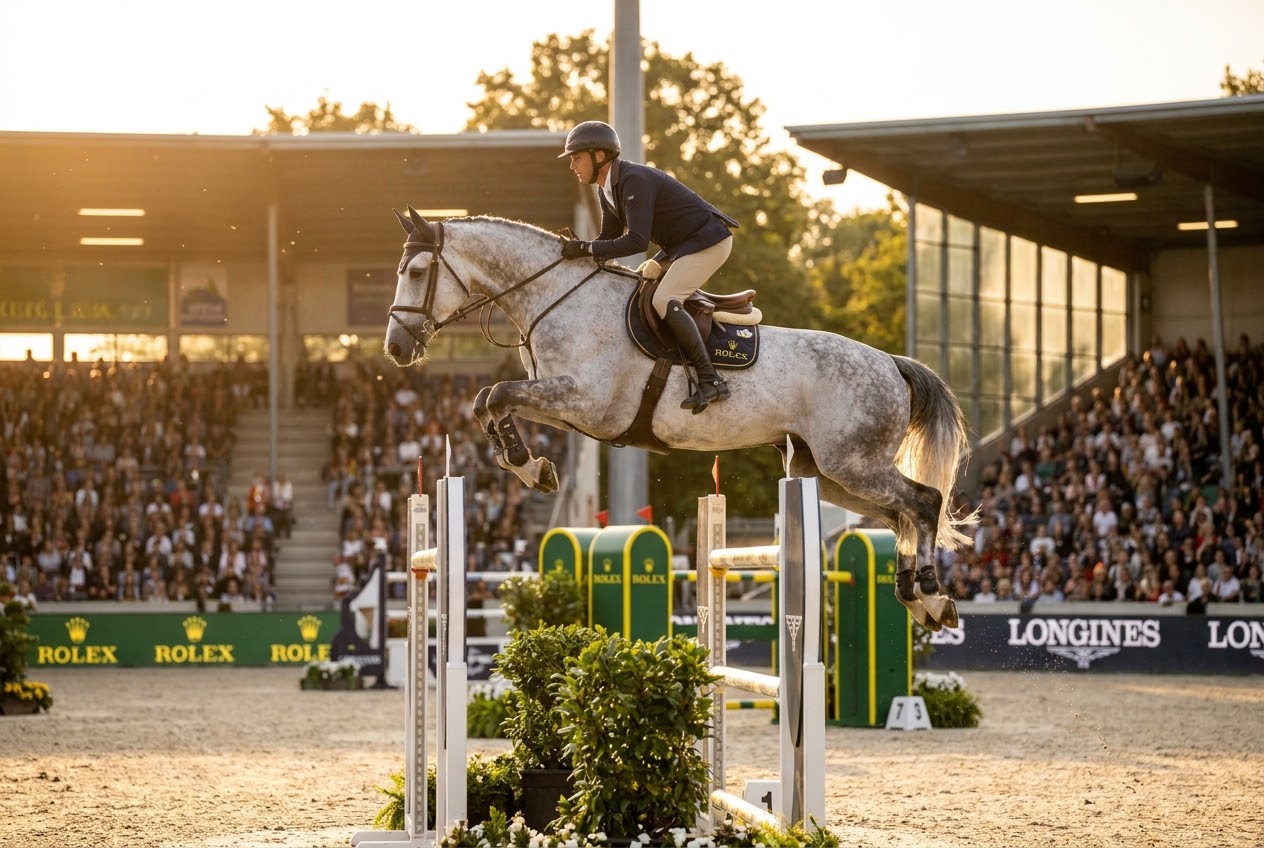
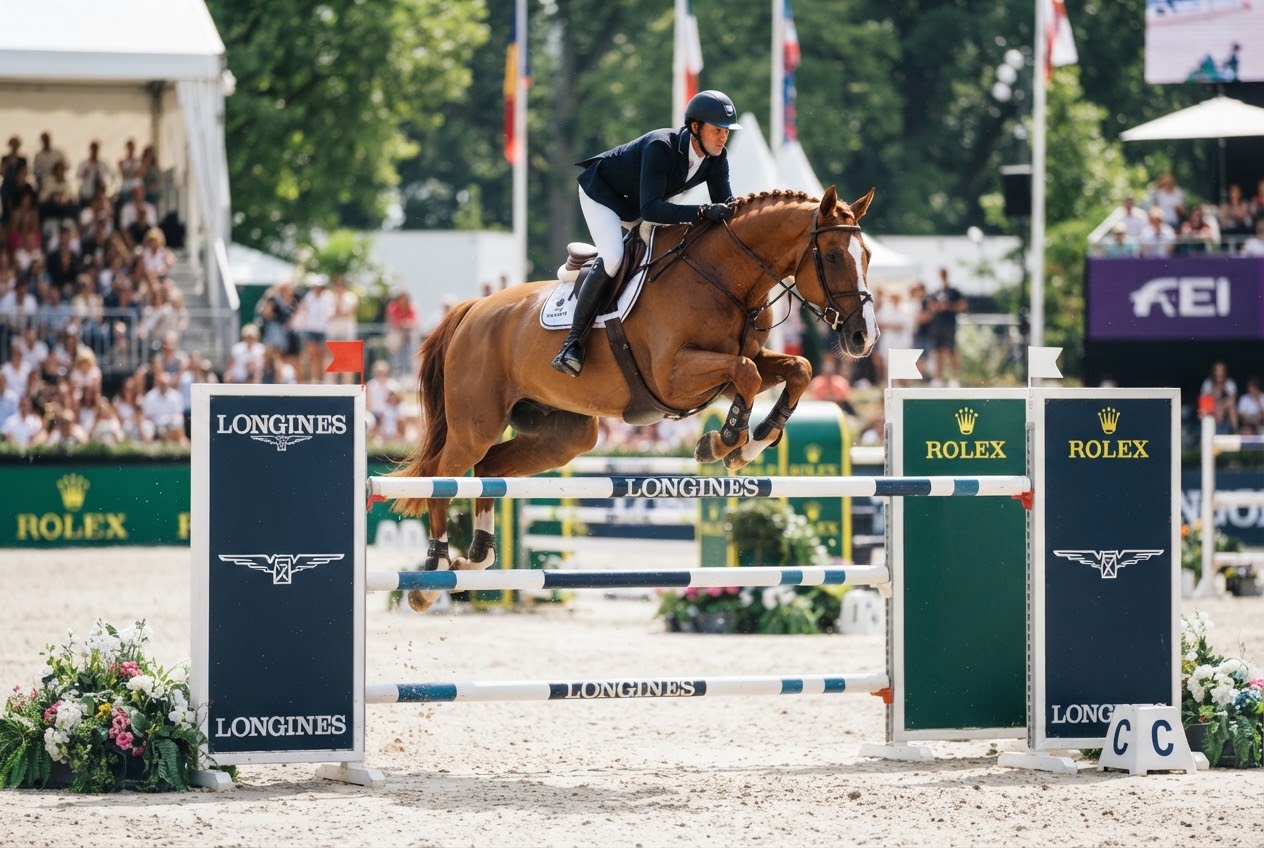
An impressive jump is more than just height. Professionals primarily evaluate how a horse jumps.
Important points of attention are:
Quick front leg technique. Correct use of the back. Powerful take-off. Good bascule. Carefulness over the obstacle.
A horse that respects the poles and jumps efficiently often has more potential for higher levels.
3. Character and Disposition
A top sport horse must not only be physically strong but also mentally suited for the sport.
Professionals look for:
Willingness to work. Learning ability. Self-confidence. Concentration. Stress resistance.
A horse that enjoys working and adapts well to new situations usually develops faster.
4. Conformation and Build
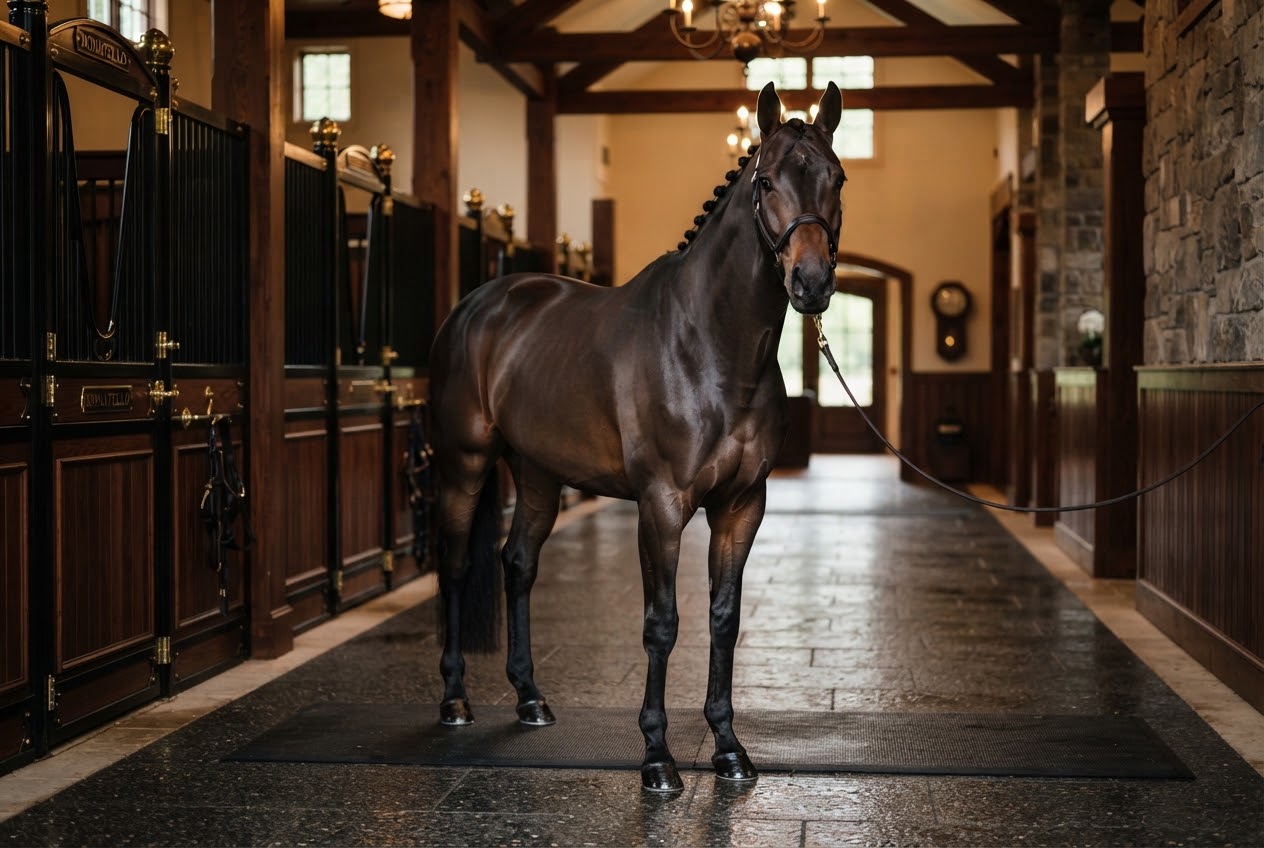
A correctly built horse has a greater chance of a long and successful sport career.
Therefore, experts assess, among other things:
Leg position. Shoulder angle. Back. Loins. Hindquarters. Hoof quality.
A functional conformation supports performance and helps prevent injuries.
5. Health and Movement
A professional not only looks at how a horse jumps but also how it moves on a straight line and on the circle.
Additionally, attention is paid to:
Purity of gaits. Suppleness. Regularity. Symmetry. General condition.
Subsequently, a comprehensive veterinary examination provides additional insight into the horse's health.
6. Pedigree and Sport Family
A proven bloodline says a lot about the potential aptitude of a show jumper.
Professionals look not only at the sire but also at:
The dam line. Siblings. Sport performance within the family. Offspring from the same mare.
A strong sport family increases the chance of success, although every horse remains an individual.
7. Rideability
A horse can have all the talent in the world; without good rideability, performing at a high level becomes difficult.
Experts therefore assess:
Reaction to aids. Lightness in the hand. Balance in turns. Adjustability. Cooperation with the rider.
A horse that is pleasant to ride often develops more easily.
8. Potential Instead of Perfection
Professionals know that young horses, especially, are still very much in development. Therefore, they don't just look at what a horse shows today, but primarily at what it can become in the future.
A small mistake during a practice jump is often less important than a horse with a lot of scope, a good disposition, and natural quality.
Experience Makes the Difference
An experienced equestrian professional combines technical knowledge with practical experience. By having seen hundreds or even thousands of horses, they are quicker to recognize subtle qualities that can make the difference between a good show jumper and a future Grand Prix horse.
That's why many buyers seek guidance from a trainer or advisor when purchasing a sport horse.
Buy with Confidence through a Professional Sales Platform
A reliable international sales platform helps buyers make an informed choice. Extensive information, professional videos, veterinary documentation, and transparent communication ensure that horses are presented honestly and completely.
This allows riders and trainers worldwide to specifically search for a show jumper that matches their level and ambitions.
Conclusion
A professional looks far beyond a spectacular jump. The combination of canter, technique, character, rideability, health, conformation, and bloodlines ultimately determines the quality of a show jumper.
Are you looking for a show jumper with proven quality and international potential? View our carefully selected range of sport horses and find the ideal partner for your sporting ambitions.