What Does a Show Jumper Cost? Price Ranges Explained
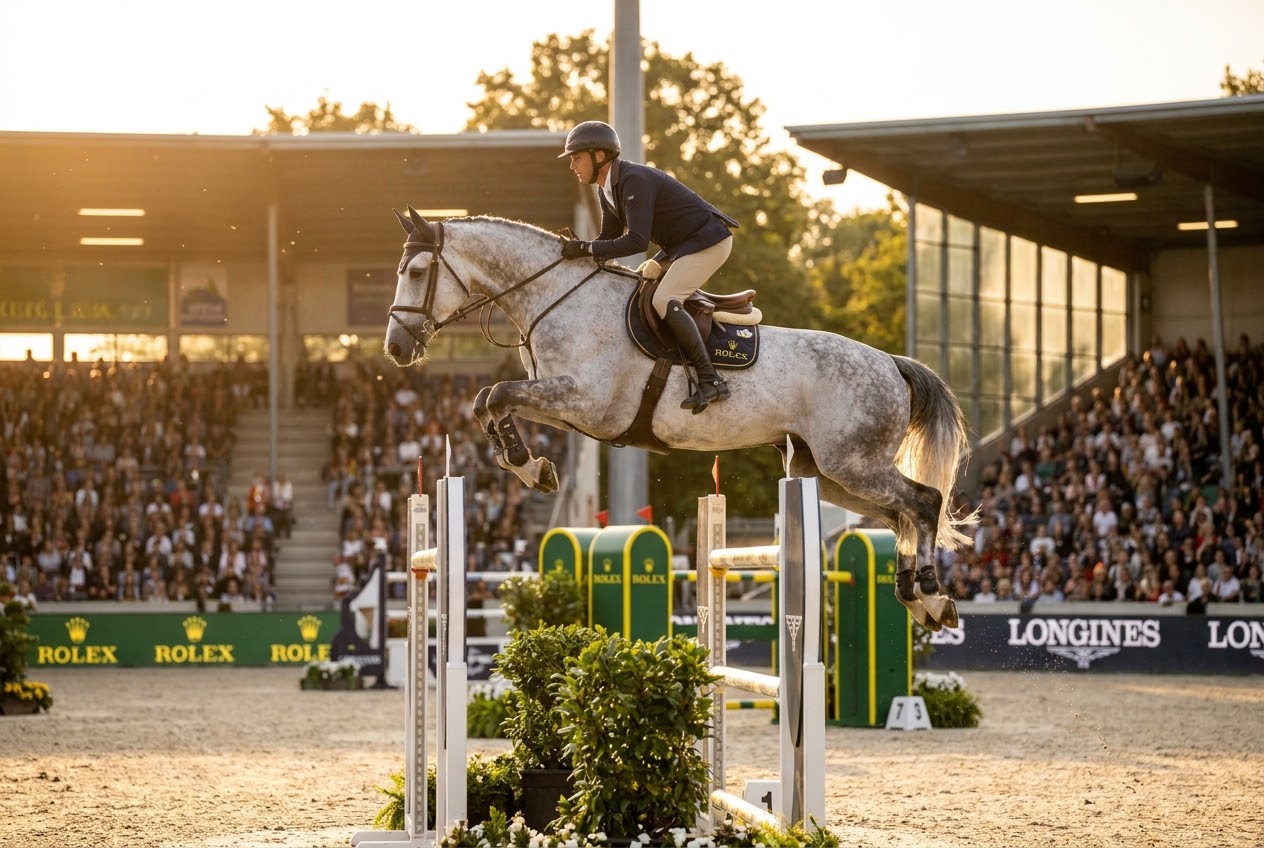
From young talent to 1.40m horse: what determines the price of a show jumper, which price ranges exist, and what to look for in each category.
"What does a show jumper cost?" is the most common question from first-time buyers, and the most honest answers start with a counter-question: what do you want to do with it? Price in sport horses is not an inherent characteristic of the horse, but the result of demand, aptitude, and proven ability.
What Determines the Price
- —Level and results. A horse demonstrably jumping 1.30m clear is more expensive than a horse from which that is expected. "Demonstrably" is key: start lists and results are verifiable.
- —Age. Three- to five-year-olds are cheaper but require time, experience, and risk. Horses between seven and ten years with results are the most expensive because they are immediately ready for competition.
- —Pedigree. Popular stallion lines increase the price, especially if the mare line also shows sport results.
- —Rideability. A horse that can be ridden by an amateur has a much larger buyer group than a horse that requires a professional. That difference is reflected in the price.
- —Health. Clean X-rays and a smooth vetting make a horse more expensive, simply because it carries less risk.
- —Gender and breeding value. For mares, breeding potential can be a factor; geldings are judged purely on sport performance.
Price Ranges in Practice
Up to € 25,000. Often young horses at the beginning of their training, or older horses that can perform well at a lower level. In this category, you buy potential and training, not certainty. Vetting is especially important here, as a health issue weighs relatively heavily on the budget.
€ 25,000 – € 50,000. The largest category for ambitious amateurs. Horses with a start in competition results, usually between five and nine years old, who can develop further with a good rider. Here, pay particular attention to rideability and whether the horse suits the rider's level.
From € 50,000. Horses with concrete results at 1.30m and higher, or exceptional young horses with a strong mare line. Here, the purchase becomes an investment, and a comprehensive veterinary examination, including an extensive series of X-rays, is standard.
This classification is a guideline, not a fixed tariff. Two horses with the same results can differ by tens of thousands of euros due to character, rideability, or the reputation of the stable.
Costs Besides the Purchase Price
Also include in your budget:
- —Pre-purchase veterinary examination, including any X-ray series.
- —Transport from the seller to your stable. You arrange this directly with the seller or a transporter.
- —Insurance, often based on the purchase price and the veterinary report.
- —VAT or tax regulations, depending on the country of the buyer and seller, and whether the seller is a private individual or a business.
- —Adjustment period: a new horse needs weeks to settle in, and that time incurs costs for stabling and guidance.
How to Avoid Overpaying
1. Compare at least five horses in the same price range before making an offer. 2. Always ask for video of a recent competition or training, not just a sales video. 3. Ride the horse yourself, preferably twice on different days. 4. Have the vetting done only after you have seen the horse, but before payment. 5. Ask for the reason for sale and what the horse cannot do; an honest seller will provide concrete answers to these questions.
View the current selection of show jumpers by price range and filter by age, level, and country to see what your budget can achieve in practice.