How to Recognize Good Movement in a Dressage Horse | Premium Sport Horses
Learn how to recognize good movement in a dressage horse. Discover what judges, trainers, and buyers look for when assessing quality and potential.
How do you recognize good movement in a dressage horse?
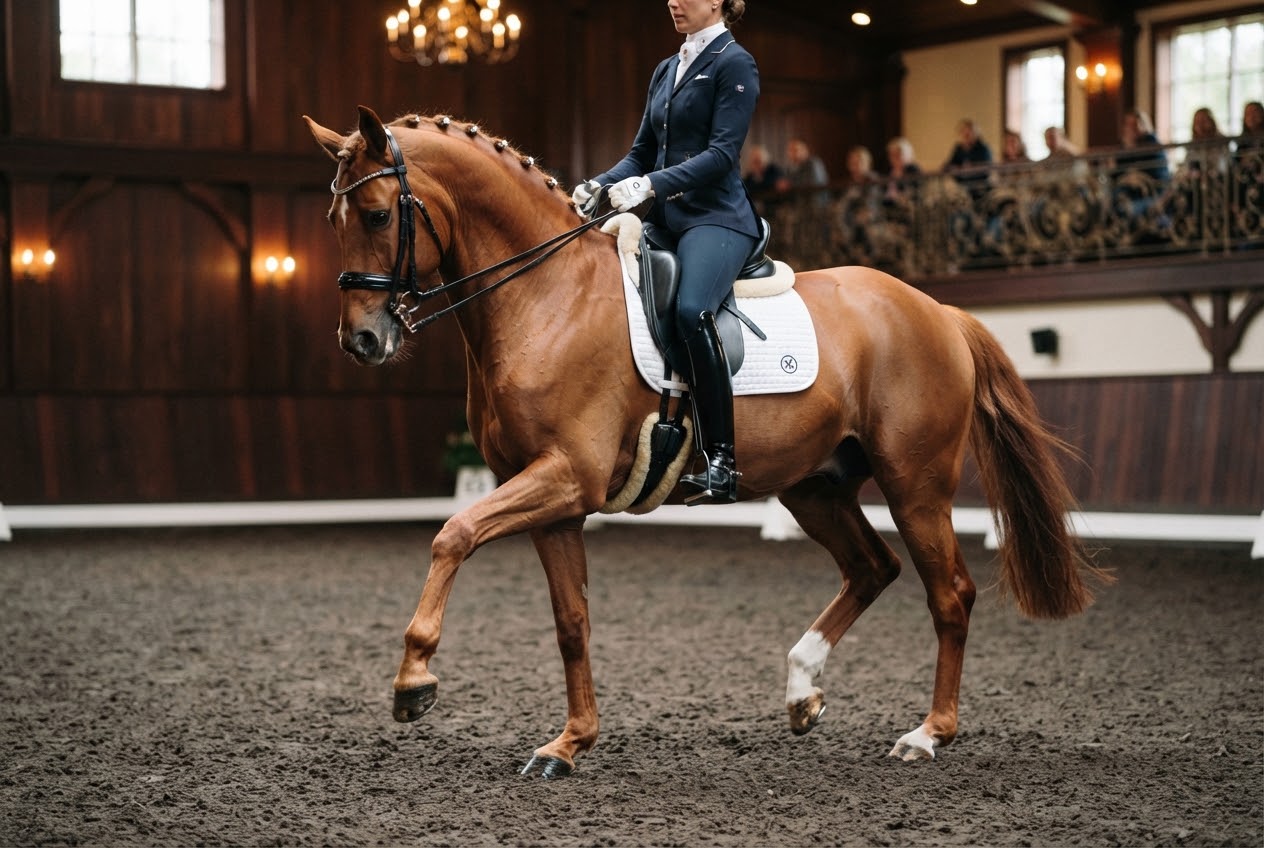
Good movement is one of the most important characteristics of a successful dressage horse. But what exactly should you look for? Many people first focus on spectacular front leg action, while experienced trainers and judges assess the overall picture. Balance, suppleness, rhythm, and the use of the hindquarters are often much more important than striking movements alone.
In this article, we explain how to recognize the quality of a dressage horse's movement.
Why are good movements so important?
Dressage is all about harmony between horse and rider. A horse that moves correctly by nature learns new exercises more easily and can develop physically better.
Good movements ensure:
More carrying power. Better balance. More suppleness. Easier collection. Durable sports performance.
A horse with a correct foundation therefore has more potential for higher-level dressage.
First, look at the rhythm
A good dressage horse moves with a regular and pure rhythm in walk, trot, and canter.
For example, pay attention to:
A relaxed walk with clear tact. A regular trot without hurry. A canter with a clear three-beat. Constant cadence during movement.
Loss of rhythm can indicate tension, imbalance, or a lack of training.
The hindquarters provide the power
Experienced dressage riders often look at the hindquarters first. This is where the impulsion necessary for good dressage originates.
You can recognize quality hindquarters by:
Active engagement. Powerful push-off. Carrying capacity. Easy closing of the hind legs under the body.
When a horse moves well from the hindquarters, the movement appears effortless and flowing.
Suppleness makes the difference
A supple horse moves loosely throughout its entire body. The back swings, and the movement flows smoothly from back to front.
Characteristics of suppleness include:
A swinging back. Relaxed neck. Elastic movements. No stiffness in the shoulders or hips.
Suppleness is an important foundation for collection and higher dressage exercises.
Balance and self-carriage
A quality dressage horse maintains balance easily, even during transitions or turns.
Pay attention to:
A natural self-carriage. Even weight distribution on all four legs. Calmness in movement. Not leaning on the forehand.
A horse that carries itself well will find it easier to learn collection later on.
Front leg action isn't everything
Many buyers are impressed by horses with extensive knee action. While expressive movements are attractive, they mean little without good hindquarters and correct body balance.
A horse that moves high with its front legs but lacks power from the hindquarters will often be less successful at higher levels.
Therefore, professionals always assess the complete movement mechanism.
Observe the horse in different situations
To properly assess the quality of movement, it's wise to observe a horse in several ways:
Loose in the arena. In-hand. On the lunge. Under saddle. During transitions. On both reins.
This provides a complete picture of the natural movement and the influence of training.
Movement and character go hand in hand
A horse with exceptional movements is not automatically the best choice. Trainability, willingness to work, and a stable character ultimately determine how much of the natural talent can be utilized.
A horse that enjoys working with its rider and learns quickly often develops further than a horse with spectacular movements but a difficult temperament.
Be guided by an expert
When buying a dressage horse, it's wise to bring an experienced trainer or instructor with you. They will objectively assess the quality of movement, conformation, and potential of the horse.
Professional advice helps make a well-informed choice and prevents you from being swayed by just a first impression.
Find quality dressage horses
On our premium sport horse platform, you'll find carefully selected dressage horses with correct movements, a good attitude, and proven sport potential. Thanks to extensive videos, professional photos, and detailed information, you can thoroughly assess the quality of each horse before planning a viewing.
Conclusion
Good movement in a dressage horse is recognized not only by spectacular gaits but primarily by rhythm, balance, suppleness, active hindquarters, and natural self-carriage. These qualities form the foundation for successful training and a sustainable career in dressage.
By looking beyond just striking movements, you increase the chance of finding a horse that not only impresses but can also grow into a reliable sport partner in the long term.
Frequently Asked Questions What do judges look at first?
Judges primarily assess the purity of the gaits, rhythm, balance, use of the hindquarters, suppleness, and overall body coordination.
Are big movements always better?
No. Big movements are only valuable when accompanied by balance, carrying power, suppleness, and active hindquarters.
Why are the hindquarters so important?
The hindquarters provide the impulsion and carrying capacity necessary for collection, balance, and the execution of higher-level dressage exercises.
Can a horse with less spectacular movements still be successful?
Absolutely. A correctly moving horse with a good character, a strong work ethic, and professional training can become very successful in dressage.