From Basic Training to Grand Prix Dressage Horse | Premium Sport Horses
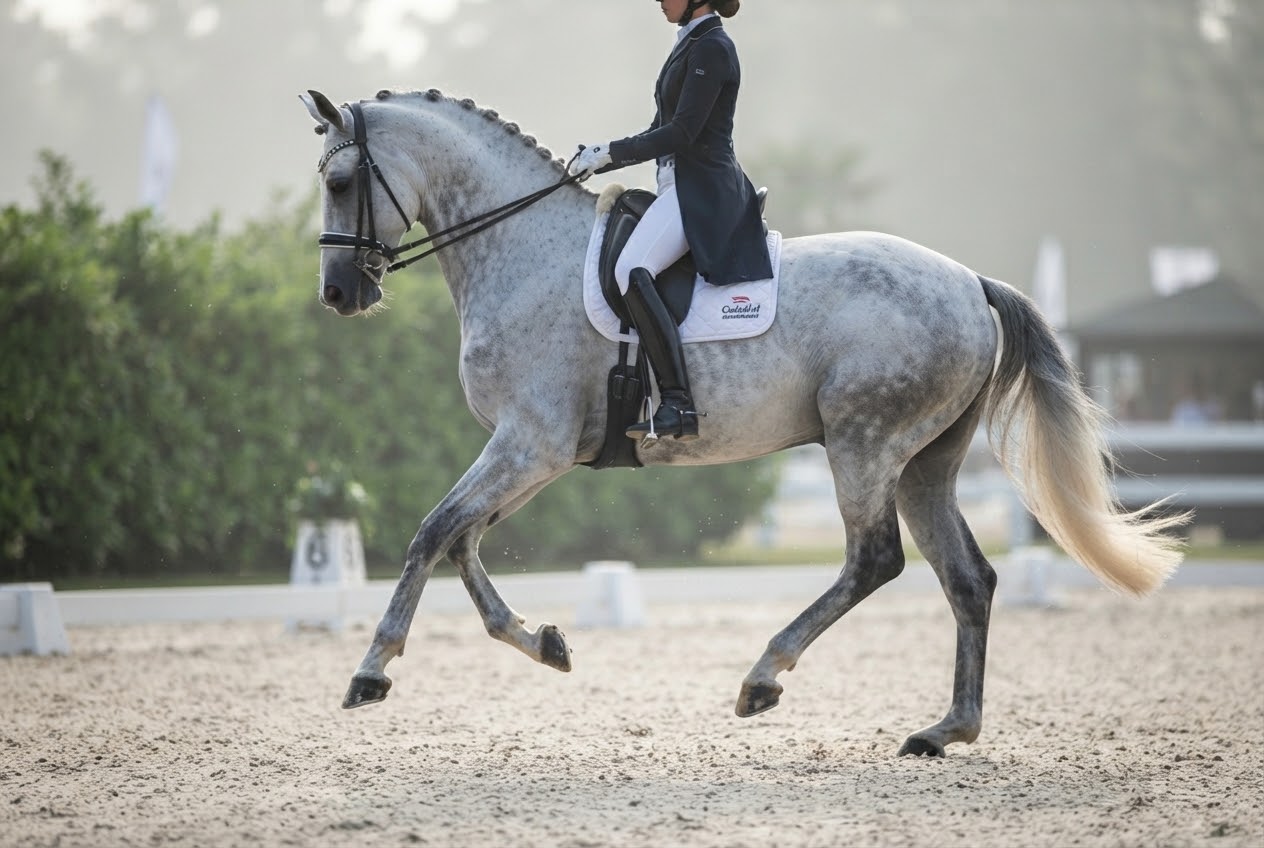
Discover how a dressage horse develops from basic training to Grand Prix. Learn everything about training, talent, patience, and the path to international top-level sport.
From basic training to Grand Prix dressage horse: the path to the top
A Grand Prix dressage horse is not made overnight. Behind every successful combination lie years of careful training, patience, and mutual trust. Only a small percentage of dressage horses ultimately reach the highest level, but a good basic education significantly increases the chance of a successful sports career.
In this article, you will discover how a dressage horse develops from its first training steps to Grand Prix.
The foundation: trust and relaxation
The training of a dressage horse begins with trust. Young horses first learn to calmly adapt to the saddle, the rider, and the various aids. In this phase, everything revolves around relaxation, regularity, and a positive learning experience.
Key points of attention include:
Correct forward movement. Rhythm and regularity in walk, trot, and canter. Relaxation in body and mind. Trust between horse and rider. Gradual build-up of strength and condition.
A strong foundation forms the basis for all exercises that follow later.
The next step: balance and suppleness
Once the horse has more confidence, the focus shifts to balance and suppleness. It learns to carry itself better and develops more power in the hindquarters.
During this phase, work is done on:
Transitions between gaits. Bending and straightness. Improvement of body use. Constant contact. Reaction to refined aids.
A horse that moves relaxed and in balance learns new exercises faster and with greater ease.
Building up towards advanced dressage
As the horse gets stronger, the exercises can be expanded. Training always remains focused on gradual development, without overloading.
In this phase, topics include:
Shoulder-in. Travers and renvers. Half-passes. Simple and flying changes. Collection.
These exercises improve the horse's strength, flexibility, and coordination, preparing it for the higher-level work.
The step to Grand Prix
The Grand Prix is the highest level within dressage and demands exceptional quality. Only horses with great talent, excellent training, and a strong physical and mental foundation can reach this level.
Typical Grand Prix exercises include:
Piaffe. Passage. Tempi changes. Pirouettes. Transitions between collected and extended gaits.
These exercises require maximum cooperation between horse and rider and years of training.
Talent alone is not enough
Impressive movements are important, but talent alone does not bring a horse to the top. At least as important are:
A willing character. Perseverance. Correct conformation. Good health. Professional guidance. A rider who gives the horse time to develop.
Precisely the combination of these factors determines whether a horse reaches its full potential.
The importance of good guidance
Developing a dressage horse requires an expert team. Trainers, veterinarians, farriers, physiotherapists, and nutrition specialists all play a role in keeping a sport horse healthy.
Regular evaluation and a training plan tailored to the individual horse ensure that the horse can develop optimally.
Investing in the future
Not every young horse becomes a Grand Prix horse, but good training increases the chance of lasting success. By investing in quality, health, and gradual development, a horse is created that can perform with pleasure and confidence.
A well-trained dressage horse often also retains its value longer and remains a pleasant partner in the sport even at an older age.
Find talented dressage horses
On our premium sport horse platform, you will find carefully selected dressage horses in various stages of training. From young talents with great potential to experienced sport horses ready for advanced dressage.
Thanks to extensive information, professional photos, and videos, you can easily compare horses and find a dressage horse that matches your experience and ambitions.
Conclusion
The path from basic training to Grand Prix is a process of years in which talent, patience, and craftsmanship come together. A solid foundation, a well-thought-out training plan, and the right guidance are indispensable for a dressage horse to perform at the highest level.
With the right combination of horse and rider, a promising talent can grow into a successful partner in national and international dressage.
Frequently asked questions How long does it take to train a Grand Prix dressage horse?
On average, it takes eight to ten years for a talented dressage horse, depending on its aptitude and development, to reach Grand Prix level.
Can every dressage horse do Grand Prix?
No. Only a small number of horses possess the physical, mental, and genetic qualities required for the highest level.
What is the most important phase in training?
The basic training is essential. A horse that learns to move in relaxation, balance, and trust has the best starting position for further development.
Where can you find dressage horses with Grand Prix potential?
On a specialized premium sport horse platform, you will find carefully selected dressage horses with quality, talent, and potential for advanced dressage.