Buying a Sport Horse | The Complete Guide for Every Rider | Avante Horse Sales
Are you buying a sport horse? Discover everything you need to know about dressage, show jumping, and eventing horses. From budget and bloodlines to vetting and international purchases.
Buying a Sport Horse: The Complete Guide to Finding Your Ideal Sport Horse
Buying a sport horse is much more than finding a beautiful horse with impressive movements. Whether you dream of competing in the dressage arena, a future in show jumping, or enjoying a reliable sport horse recreationally, the right choice isn't made in a single day.
A sport horse is a partner with whom you will work together for many years. Therefore, it's important to look beyond appearance, pedigree, or an impressive video. Character, health, training, and the connection between horse and rider ultimately determine whether a purchase will be successful.
The international sport horse market has changed significantly in recent years. Thanks to online platforms, it has become easier to compare horses from different countries. This gives buyers access to a much larger selection than ever before. At the same time, this demands knowledge, preparation, and a critical eye.
In this complete guide, you will discover everything you need to know before buying a sport horse. From defining your goals to pre-purchase vetting and safely buying a horse from abroad.
What is a Sport Horse?
A sport horse is a horse that has been bred and trained for performance within equestrian sports. Depending on the discipline, the emphasis is on different qualities, such as movement, athleticism, strength, balance, temperament, and rideability.
Within the sport horse world, different disciplines are distinguished.
Dressage Horses
Dressage horses possess expansive gaits, good balance, suppleness, and a natural ability to collect. In addition to talent, willingness to work and a good temperament are equally important.
Show Jumpers
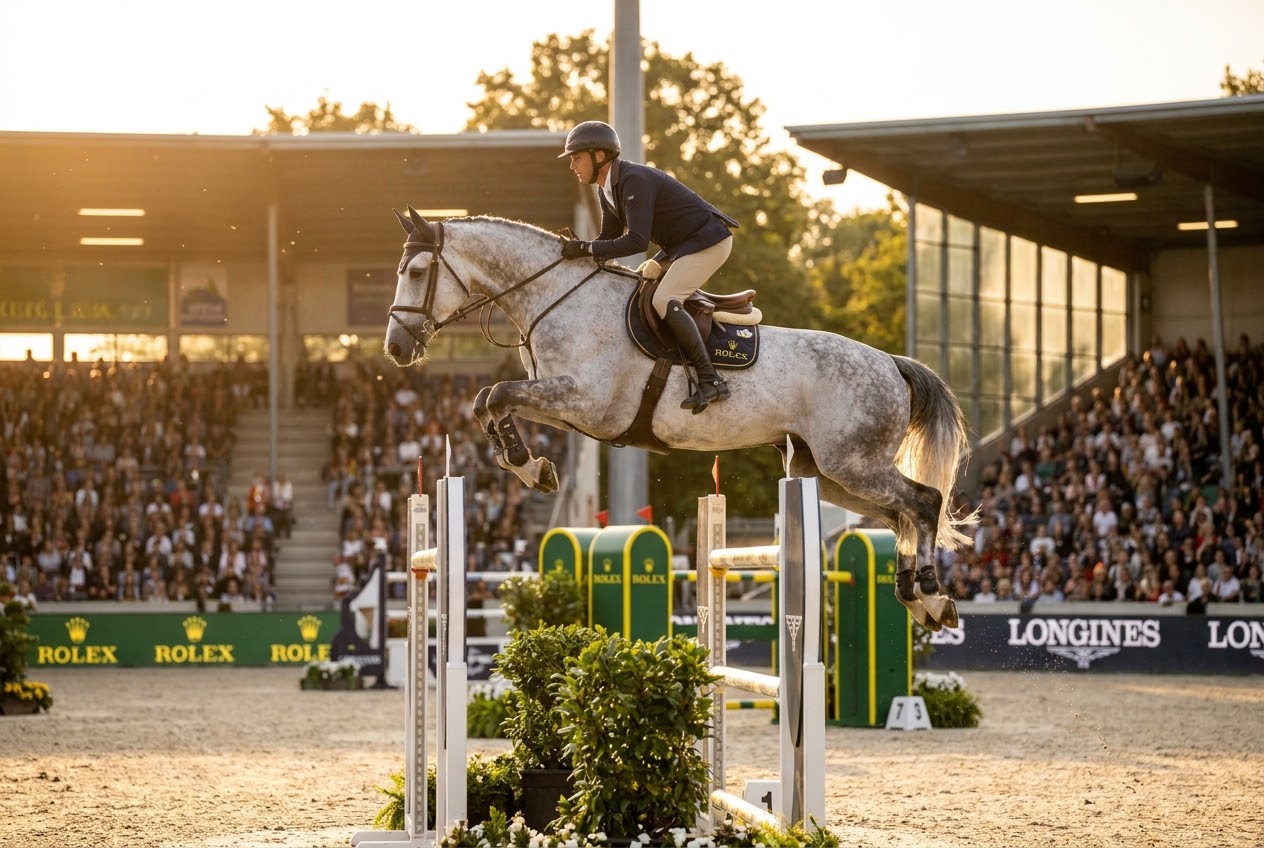
Show jumpers must possess scope, reflexes, technique, and carefulness over the jump. Additionally, courage, temperament, and athleticism play a major role.
Eventing Horses
Eventing combines dressage, show jumping, and cross-country. Therefore, these horses must be versatile, courageous, fit, and intelligent.
Although each discipline places different demands, for all sport horses, health, character, and longevity are ultimately more important than spectacular movements alone.
Why Invest in a Good Sport Horse?
A quality sport horse offers more than just athletic performance.
A horse that matches your level and ambitions often provides:
more enjoyment during riding; a safer partnership; better and faster development; more opportunities within competition sport; a higher resale value when you wish to sell later.
A cheaper horse doesn't always turn out to be the most economical choice in hindsight. Medical issues, a difficult temperament, or a poor match can ultimately cost much more than a higher purchase price.
Therefore, it's wise not to just look at the purchase price, but at the total long-term investment.
First Define Your Goal
One of the most common mistakes is that buyers look for a horse before they have a clear idea of what they want to achieve with it.
So, first ask yourself:
Do I want to ride recreationally or compete? Which discipline do I want to pursue? What level do I currently ride at? Where do I want to be in five years? Am I looking for a young talent or an experienced schoolmaster?
Answering these questions beforehand will make it much easier to make a suitable selection.
Which Sport Horse Suits Your Level?
Not every talented horse suits every rider. The best combination arises when experience, ambition, and character align well.
Beginner Competitor
For a less experienced rider, a reliable and forgiving horse is often the best choice. A horse that already has competition experience builds confidence and helps the rider to develop further.
Ambitious Amateur
Do you compete regularly and want to progress? Then a younger horse with potential might be interesting. You invest in the horse's development and grow together to a higher level.
Professional Rider
Professionals often look at other characteristics. Pedigree, aptitude for higher exercises, athleticism, temperament, and commercial value then play a larger role.
An experienced trainer can help objectively assess a horse's qualities and development potential.
How to Determine a Realistic Budget?
The purchase price is only a part of the total cost. Also consider the expenses that follow once the horse is in the stable.
For example, think of:
boarding; farrier; veterinarian; dentist; physiotherapy; saddle fitter; feed and supplements; insurance; training; competition costs; transport.
A good budget prevents you from only looking at the purchase price and helps you make a choice that is also responsible in the long term.
Age: Young Talent or Experienced Sport Horse?
The age of a horse has a significant impact on its possibilities and the investment.
Young Horses
Young horses offer great development potential. They are often attractively priced compared to horses with the same aptitude that are already more advanced in training. On the other hand, training requires time, experience, and patience.
Experienced Sport Horses
An older horse with competition experience often provides more certainty. You know better what you are buying and can start training or competing more quickly.
The right choice depends on your experience, goals, and available time.
Why Character is at Least as Important as Talent
A spectacularly moving horse immediately attracts attention. However, in practice, character often proves to be more decisive for a successful partnership.
A good sport horse is:
willing to work; reliable; eager to learn; stress-resistant; honest in its work.
A horse that enjoys working together will usually develop better than an extremely talented horse that is difficult to ride or train.
Therefore, it is wise during a viewing not only to look at the gaits or jumps but also at the behavior in the stable, during saddling, and in interaction with people.
Good Preparation Prevents Disappointment
Buying a sport horse is an investment in your future as a rider. The better prepared you are, the greater the chance of finding a horse that not only impresses today but also fits your ambitions five or ten years from now.
In the next part of this guide, we will delve deeper into assessing conformation and movement, the importance of bloodlines, what to look for during a viewing, and how a professional pre-purchase veterinary examination proceeds.
Assessing Conformation and Movement: What to Look For?
A sport horse may look impressive on video, but during a viewing, you truly see how a horse is built and moves. Conformation not only determines a horse's appearance but also influences its performance, resilience, and longevity. A well-built horse can handle the physical demands of training and competition better than a horse with clear conformational faults.
While no horse is perfect, it's important to look at the overall picture. Minor deviations may not be an issue if they do not affect health or performance.
The Foundation Forms the Basis
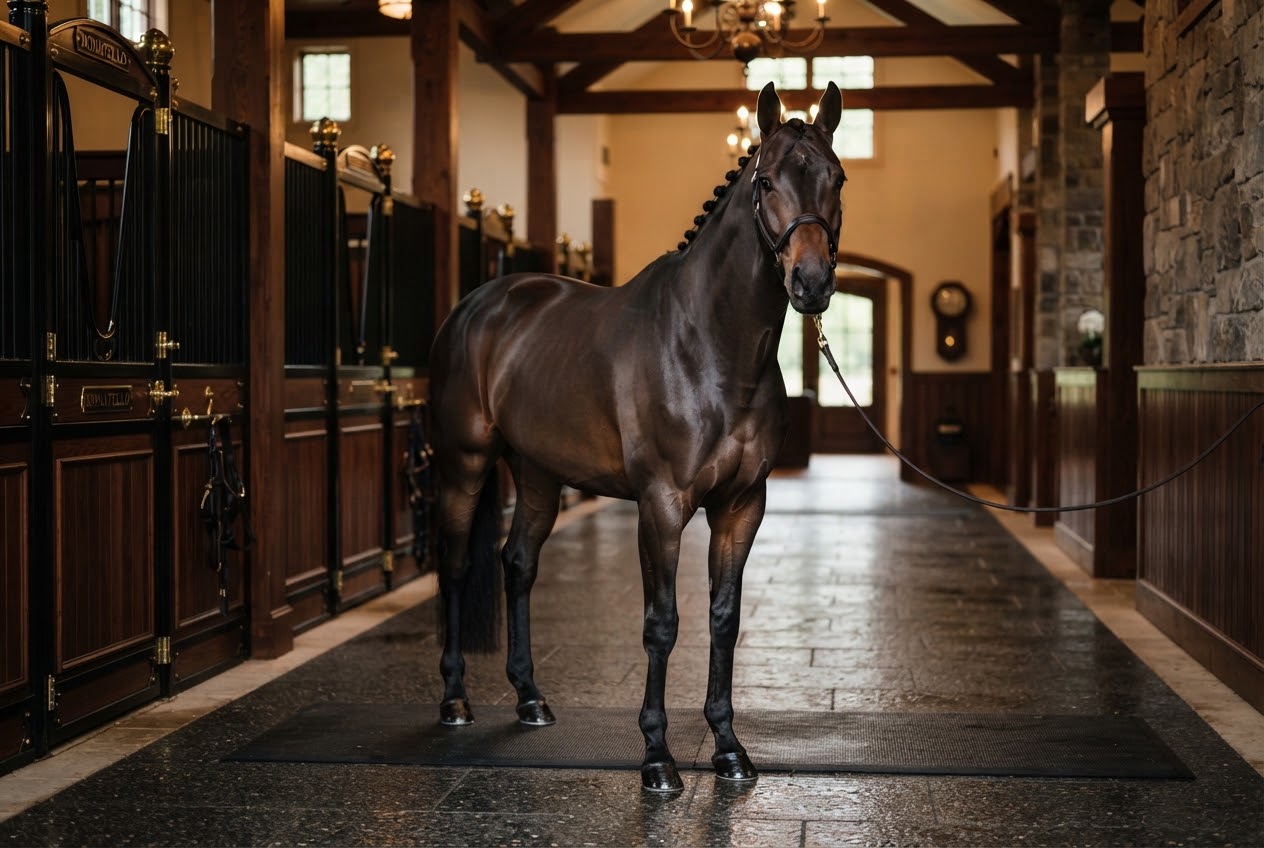
Experienced riders and trainers often start with the foundation. Strong, correctly built legs and healthy hooves are essential for a sport horse that needs to perform at a high level for years.
Pay attention to, among other things:
Correct leg conformation. Strong and well-formed hooves. Clean, healthy joints. Symmetry between left and right. No visible swellings or old injuries.
A good foundation contributes to the horse's longevity and reduces the risk of injuries.
The Build of the Body
In addition to the legs, the rest of the body also plays an important role.
For example, look at:
The length of the neck. The shoulder angle. The back. The loins. The muscling. The hindquarters.
A good sport horse has sufficient room to develop and use its body correctly during work.
In dressage, suppleness and balance are often more important than a spectacular front leg. For show jumpers, the emphasis is more on power, speed, and athleticism.
How to Recognize Good Movement?
Many buyers are tempted by horses with spectacular front leg action. However, professional riders often look at entirely different aspects.
Good movement starts from behind.
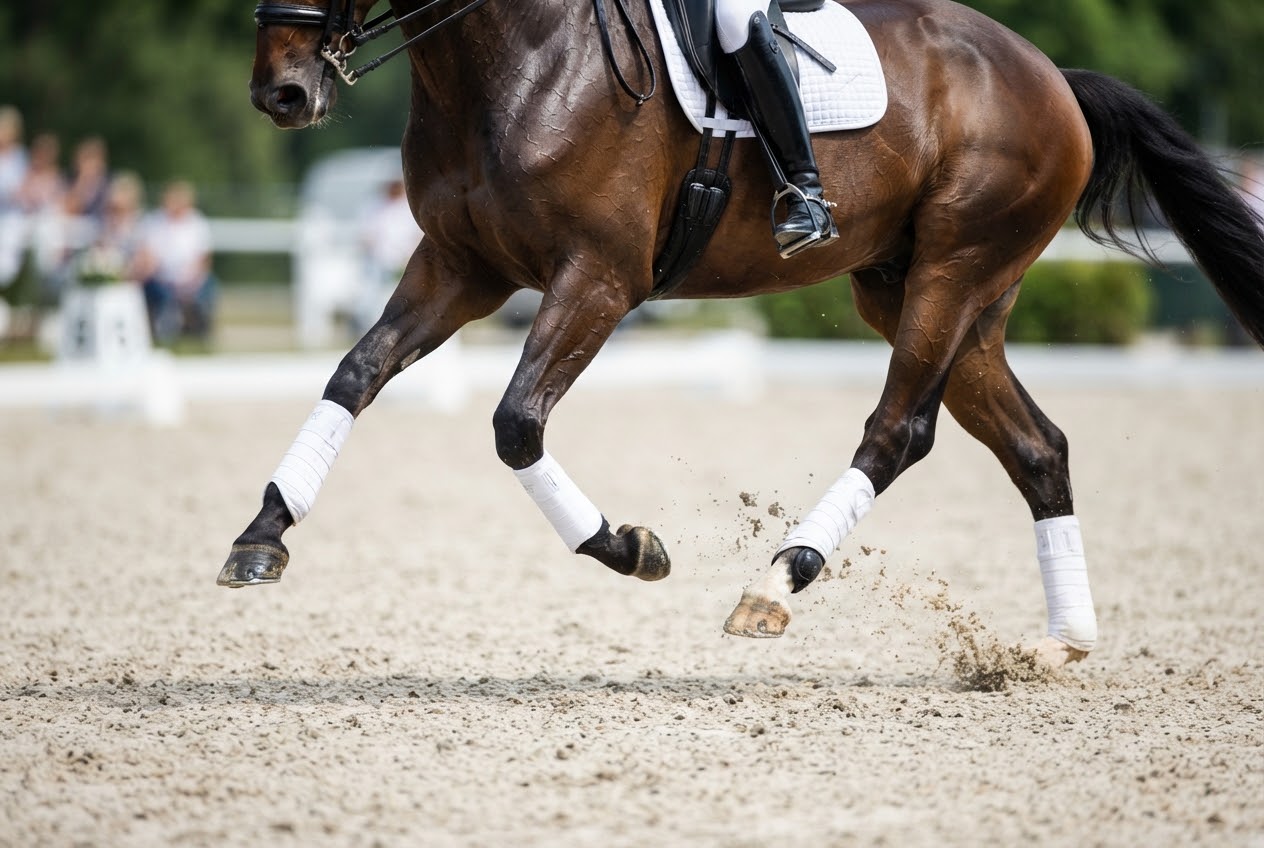
The hind legs provide impulsion, carrying power, and balance. When a horse actively uses its hindquarters, better self-carriage and more quality in the gaits naturally arise.
When assessing movement, you pay attention to, among other things:
Regularity. Rhythm. Balance. Suppleness. Push from the hindquarters. Self-carriage. Relaxation.
A horse that moves relaxed usually honestly shows its natural quality.
Look at All Three Gaits
For a dressage horse, you assess walk, trot, and canter separately.
Walk
A good walk is spacious, pure, and relaxed. The horse moves with sufficient body use and shows a clear overtrack.
Troth
In the trot, you pay attention to balance, impulsion, shoulder freedom, and the use of the hindquarters. High knee action alone means little if the hind legs are not sufficiently engaged.
Canter
A quality canter is uphill, powerful, and easily regulatable. Especially for the higher dressage exercises, a good canter forms an important basis.
The Influence of Pedigree
Pedigree plays an important role within the sport horse world. Good bloodlines increase the chance of aptitude for sport but never guarantee success.
A horse with a known pedigree often has:
proven sport genes; interesting breeding value; a higher market value; more international interest.
However, every horse remains an individual. A less known bloodline can perform excellently when character, health, and training are good.
Therefore, use pedigree as a tool, not as the sole selection criterion.
Health Above All
Talent is important, but a healthy horse ultimately has the most value.
Therefore, always ask the seller about:
previous injuries; surgeries; medication; allergies; lameness; veterinary treatments.
An open and transparent seller will share this information without problems.
The First Viewing
A viewing is much more than just a test ride.
Take your time to observe the horse in various situations.
For example, observe:
How is the horse in the stable? Is it calm during grooming? How does it react to unfamiliar people? How does it behave during saddling? Is it relaxed during riding? Does it remain calm after work?
These moments often provide an honest picture of the character.
Let the Owner Ride First
Always ask if the current rider or owner would like to ride the horse first.
This way, you see:
how the horse normally moves; how it reacts to aids; how it jumps or performs exercises; how it handles new situations.
Only then do you get on yourself.
Take a Test Ride
During the test ride, it's not about impressive exercises, but about the feeling.
Ask yourself:
Do I feel safe? Does the horse respond well to my aids? Is the tempo suitable for me? Is the horse relaxed? Can I communicate easily?
The perfect combination often feels right naturally.
Bring an Expert
Emotions play a big role when buying a horse. Therefore, it is wise to bring an independent trainer, instructor, or experienced equestrian professional.
An expert objectively looks at things you might overlook yourself, such as:
the quality of movement; the horse's conformation; rideability; any points of concern.
A second opinion often prevents costly mispurchases.
Don't Rely Solely on Photos and Videos
Professional photos and videos are an excellent tool for comparing horses. However, they never show the complete story.
Videos are often recorded under ideal conditions and usually show a horse's strongest qualities.
Therefore, use online information as a first selection, but never base a purchase solely on visual material.
Don't Make a Hasty Decision
When you finally find a horse that meets many of your wishes, pressure often arises to make a quick decision. However, precisely then, calm is important.
Sleep on it, discuss your impressions with your trainer, and carefully weigh all information.
You don't buy a sport horse for a few months, but often for many years. A well-considered decision ultimately leads to more enjoyment and better athletic results.
In the next part of this guide, we will delve deeper into the pre-purchase veterinary examination, buying a sport horse internationally, transport, documents, and the most common mistakes during the purchase process.
The Pre-Purchase Examination: An Indispensable Step
Have you found a sport horse that meets your requirements? Then the next step is perhaps the most important of the entire purchase process: the pre-purchase veterinary examination.
A pre-purchase examination provides insight into the health and soundness of the horse at the time of examination. It is not a guarantee that a horse will never get an injury but helps to identify potential risks before the purchase is finalized.
For a sport horse, an independent pre-purchase examination is always advisable, regardless of age or price range.
What Happens During a Pre-Purchase Examination?
The exact content of a pre-purchase examination can vary but usually consists of a combination of a clinical examination and – if desired – additional imaging.
A veterinarian assesses, among other things:
General health. Heart and lungs. Eyes. Teeth. Skin and coat. Legs and joints. Locomotor system. Movement on hard and soft ground.
Depending on the discipline, age, and value of the horse, additional examinations may be performed.
When Are X-rays Advisable?
For many sport horses, X-rays are taken of the feet, fetlocks, hocks, stifles, and sometimes the back or neck.
For horses that will perform at a higher sport level, this is often a logical choice. X-rays can reveal existing abnormalities that are not immediately apparent during the clinical examination.
It is important to know that an abnormality on an X-ray does not automatically mean that a horse is unsuitable for sport. Conversely, a horse with perfect X-rays can still suffer an injury later.
Therefore, the examination results should always be evaluated in combination with the clinical examination and the intended use of the horse.
Buying a Sport Horse Abroad
More and more riders look across borders when searching for a sport horse. Thanks to international horse trade, the supply is greater than ever, and horses from different countries can be easily compared.
Countries like the Netherlands, Germany, Belgium, Denmark, and France are known worldwide for their high-quality breeding and successful sport horses.
Searching internationally offers many advantages but also requires good preparation.
Check All Documents
Always check that all documents are complete before purchase.
Think of:
The original horse passport. Chip registration. Ownership details. Vaccination history. Competition records. Pedigree papers.
Also check that the details match the horse you have viewed.
Arrange Professional Transport
After the purchase, the horse must be safely transported to its new stable.
International horse transporters have specially equipped trucks and know the regulations for international transport.
A professional transporter provides, among other things:
Safe transport. Travel planning. Required health documents. Good care along the way.
This ensures the horse arrives safely and as comfortably as possible at its new destination.
Common Mistakes When Buying a Sport Horse
Even experienced riders sometimes make mistakes during the purchase process. By recognizing these pitfalls, you increase your chances of a successful purchase.
Only Looking at Appearance
A horse with spectacular movements immediately attracts attention. However, character, health, and rideability ultimately determine the success of the combination much more often.
Buying a Horse That Is Too Difficult
Many riders buy a horse for the level they hope to achieve instead of the level they currently ride at.
A reliable horse with which you can grow usually provides more enjoyment and better performance than an extremely talented horse that requires too much experience.
Not Having an Independent Pre-Purchase Examination Performed
Due to enthusiasm, a pre-purchase examination is sometimes skipped. This can later lead to unpleasant surprises and high costs.
Deciding Too Quickly
Buying a horse is a significant investment. Take your time to view different horses and do not let yourself be pressured.
Why Choose Avante Horse Sales?
At Avante Horse Sales, we believe that a successful purchase begins with trust, transparency, and quality.
Our platform brings ambitious riders, professional sellers, breeders, and sport stables from home and abroad together. This gives you access to an international selection of carefully presented sport horses.
On Avante Horse Sales, you will find, among other things:
Dressage horses. Show jumpers. Eventing horses. Young sport horses. Experienced competition horses. Horses for amateurs and professionals.
Every advertisement aims to give buyers the most complete picture possible. Professional photos, videos, detailed descriptions, and clear information help you make a well-considered selection before planning a viewing.
Our goal is not to offer as many horses as possible but to create the right match between horse and rider.
Conclusion
Buying a sport horse is an investment in the future. By clearly defining what you are looking for beforehand, carefully comparing different horses, and paying attention to health, character, and training, you increase the chance of a successful purchase.
Take your time to view horses in person, always have an independent pre-purchase examination performed, and seek advice from experienced professionals if you have doubts.
Whether you are looking for a promising young talent or an experienced competition horse, good preparation remains the key to a successful partnership.
Through Avante Horse Sales, you discover an international selection of quality sport horses and come directly into contact with reliable sellers. This makes the search for your ideal sport partner clear, safe, and professional.
Frequently Asked Questions About Buying Sport Horses What does a sport horse cost?
The price of a sport horse depends on various factors, such as age, pedigree, training level, competition results, and health. A young horse with great potential can be significantly more affordable than a horse already successfully performing at a higher level. Therefore, it is wise not only to look at the purchase price but also at the total costs for care, training, housing, and veterinary care.
Is it better to buy a young or experienced sport horse?
That depends on your experience and ambitions. A young horse offers many development opportunities but requires time, knowledge, and patience. An experienced sport horse often provides more certainty and can help a rider develop faster. For many amateur riders, an experienced horse is often the most suitable choice.
What should I look for during a viewing?
Don't just pay attention to performance under saddle. Also observe how the horse behaves in the stable, during grooming, saddling, and loading. A calm, willing, and reliable character is at least as important as talent and appearance.
Is a pre-purchase examination mandatory?
A pre-purchase examination is not mandatory but is highly recommended. An independent veterinarian assesses the horse's health and can identify any points of concern. Especially when investing in a sport horse, this is an important step.
Can I safely buy a sport horse abroad?
Yes. More and more sport horses are bought and sold internationally. By using a reliable platform, planning a personal viewing, and having a pre-purchase examination performed, you can also buy a horse internationally with confidence.
Why do more and more riders choose an online horse platform?
Online platforms offer a much larger selection than the traditional market. You can easily compare horses, view videos, read information about pedigree and training, and contact sellers directly. This makes the search more efficient and clear.
Summary
Buying a sport horse is an important decision that requires good preparation. By defining your goals beforehand, critically assessing health, character, conformation, and training, and always having an independent pre-purchase examination performed, you increase the chance of a successful purchase.
The international horse market now offers more opportunities than ever. Thanks to online platforms, it is easy to compare sport horses from different countries and get in touch with professional sellers. Nevertheless, a personal viewing and a careful purchase process remain indispensable.
A good sport horse is not necessarily the horse with the most spectacular movements or the most famous pedigree. The best choice is a horse that matches your experience, goals, and future plans. When horse and rider fit well together, a partnership arises in which both can develop optimally.
Find Your Ideal Sport Horse via Avante Horse Sales
At Avante Horse Sales, we bring ambitious riders and professional sellers from all over Europe together. Our platform is developed for everyone looking for quality, transparency, and an international selection of sport horses.
Whether you are looking for a promising dressage horse, an experienced show jumper, or a talented eventing horse, at Avante Horse Sales you will find carefully presented horses with extensive information, professional photos, and videos.
Our mission is simple: bringing the right rider together with the right horse. Thanks to our international network and our focus on quality, we make the search for your next sport partner easier, more reliable, and more professional.
Are you ready for the next step? View the current selection on Avante Horse Sales and discover which sport horses are available for your ambitions.
Related Articles
Also read these comprehensive guides in our knowledge base:
Buying Dressage Horses: The Complete Guide Buying Show Jumpers: The Complete Guide Buying a Horse Internationally Selling Sport Horses How to Choose a Dressage Horse That Suits Your Level? Buying Young Dressage Horses with Talent How to Recognize Good Movement in a Dressage Horse? Dressage Horses for International Sport Safely Buying a Horse Through an International Platform Buying Sport Horses from Abroad How Does Buying a Horse from Abroad Work? Exporting Horses Abroad Why More and More Riders Buy Horses Online The Growing International Market for Sport Horses