Buying Dressage Horses | The Complete Guide | Avante Horse Sales
Are you looking for a dressage horse? Discover what to look for when buying a dressage horse. From movement and character to bloodlines and vetting.
Buying Dressage Horses: The Complete Guide to Finding Your Ideal Dressage Horse
Buying a dressage horse is a significant step. Whether you're riding your first competitions, aiming to progress to higher levels, or dreaming of international competitions, the right choice begins with a horse that suits your level, ambitions, and riding style.
In the sport of dressage, it's not just about spectacular movements. A successful dressage horse combines talent with health, temperament, trainability, and a good partnership with the rider. This combination determines whether a horse can develop into a reliable sport partner.
Thanks to the international horse market, the selection today is greater than ever. Through specialized platforms like Avante Horse Sales, you can easily compare dressage horses from different countries. This offers many opportunities, but also makes it important to be well-prepared when searching.
In this complete guide, you'll learn what to look for when buying a dressage horse, which characteristics are important, and how to find a horse that fits your athletic future.
What makes a good dressage horse?
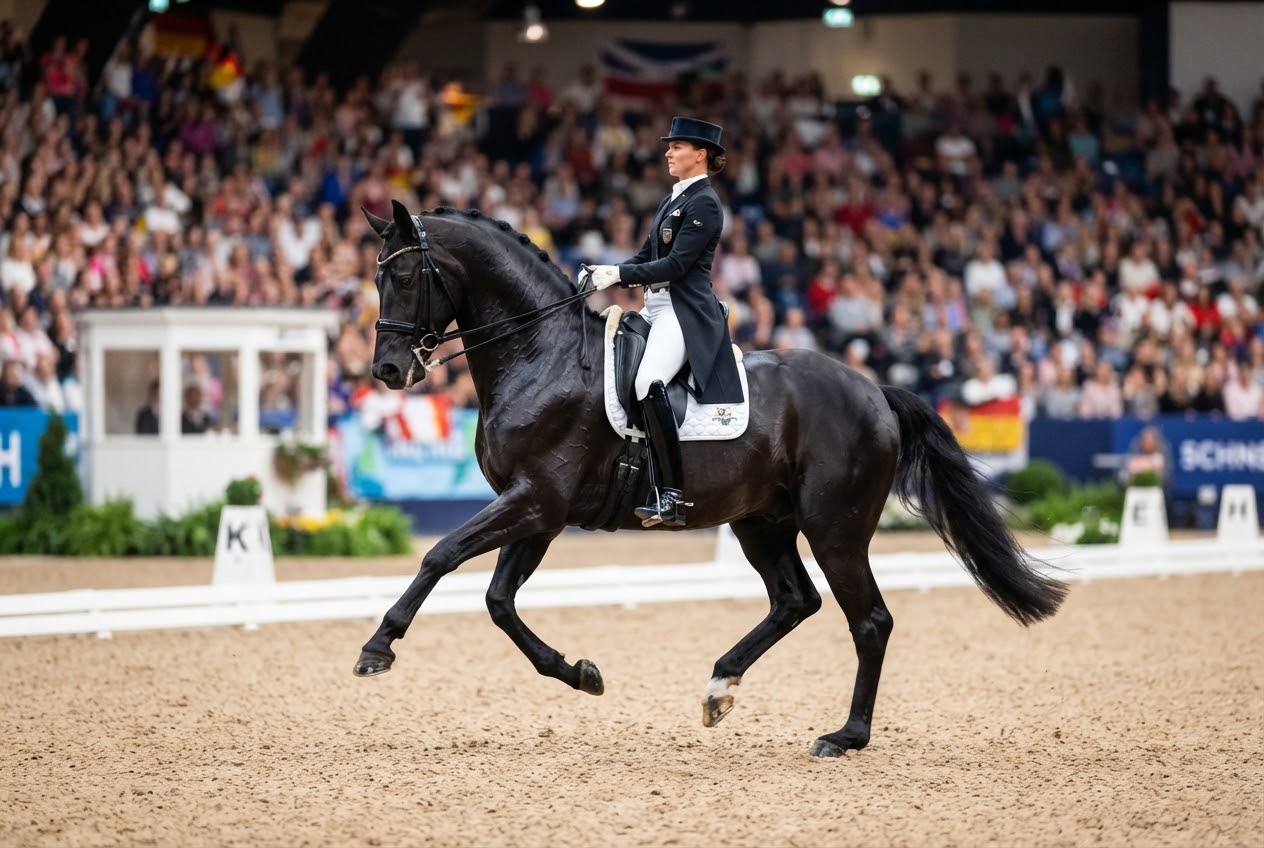
A good dressage horse is more than just a horse with big gaits. At a high level, dressage is about harmony, balance, strength, suppleness, and correct training.
The best dressage horses often possess a combination of:
An active hind leg. Natural balance. Good body control. Suppleness. Work ethic. A stable temperament. Athletic ability.
These qualities ensure that a horse develops more easily and ultimately has more potential for higher-level exercises.
Choose a horse that matches your level
A common mistake is that buyers are tempted by spectacular movements or impressive competition results. However, it is more important that a horse matches your current experience.
Novice dressage rider
Are you just starting out in competitions or want to gain more experience? Then a reliable and experienced horse is often the best choice. A horse that is calm, forgiving of mistakes, and enjoys its work will help you grow with confidence.
Ambitious amateur
Are you already competing and want to progress to higher levels? Then a younger horse with potential can be an interesting investment. Together, you'll go through the training and build a strong partnership.
Professional rider
Professional riders often look at other factors, such as aptitude for collection, quality of the canter, bloodlines, trainability, and international potential. They seek a horse that not only performs well now but also has the qualities to continue developing.
Young dressage horses or experienced competition horses?
One of the first choices you make is the age of the horse.
Young dressage horses
Young horses offer a lot of potential and can be fully trained according to your wishes. However, they require more time, experience, and patience.
Advantages:
Many development opportunities. Often more attractively priced. Growing together as a combination.
Disadvantages:
Less predictable. More training work. More patience required. Experienced dressage horses
A horse that already has competition experience often provides more certainty. You have a better idea of how the horse performs, how it reacts under pressure, and what level it masters.
For many amateur riders, an experienced horse is the most sensible choice.
Character: The key to a successful partnership
In dressage, everything revolves around partnership. That's why character is at least as important as talent.
A good dressage horse is:
Reliable. Willing to work. Focused. Eager to learn. Relaxed. Mentally stable.
A horse with a pleasant temperament often learns faster and provides more enjoyment during daily training.
During a viewing, it is therefore important not only to look at its performance under saddle but also at its behavior in the stable, during grooming, and in handling with people.
How do you recognize quality in movement?
Movement is an important part of dressage, but don't be misled by spectacular front leg action alone.
Professional trainers primarily look at:
Hindquarter activity. Rhythm. Regularity. Suppleness. Balance. Self-carriage. Ability to transition.
A horse that uses its hindquarters well builds strength more easily and will ultimately be able to collect better.
The walk
A good walk is relaxed, spacious, and pure. The horse should clearly overtrack and allow its body to move loosely.
The trot
In the trot, you look at impulsion, balance, shoulder freedom, and body use. Not the highest knee action, but the quality of the overall movement picture is decisive.
The canter
A powerful, uphill canter forms the basis for many exercises in higher-level dressage. A good canter is often a strong indicator of future potential.
Conformation and build
Besides movement, conformation plays an important role.
A well-built dressage horse usually has:
Correct leg conformation. A strong back. A well-developed hindquarters. A sloping shoulder. A correct neck set. Sufficient musculature.
While no horse is perfect, functional conformation contributes to longevity and performance.
The influence of bloodlines
Bloodlines play an important role in dressage breeding. Well-known bloodlines have often proven their qualities in the sport and provide an indication of a horse's genetic predisposition.
However, a famous pedigree is never a guarantee of success. Ultimately, health, character, training, and management also determine how far a horse develops.
Therefore, use bloodlines as a tool, but always assess the complete picture.
Viewing a dressage horse: what to look for?
Have you found one or more dressage horses that meet your requirements? Then it's time for a viewing. This is the moment when you discover whether a horse truly matches your expectations. Photos and videos give a first impression, but only during a personal acquaintance will you get a complete picture of the horse.
Take your time and don't be swayed by an impressive first impression. A successful purchase revolves around the complete package: health, character, rideability, and potential.
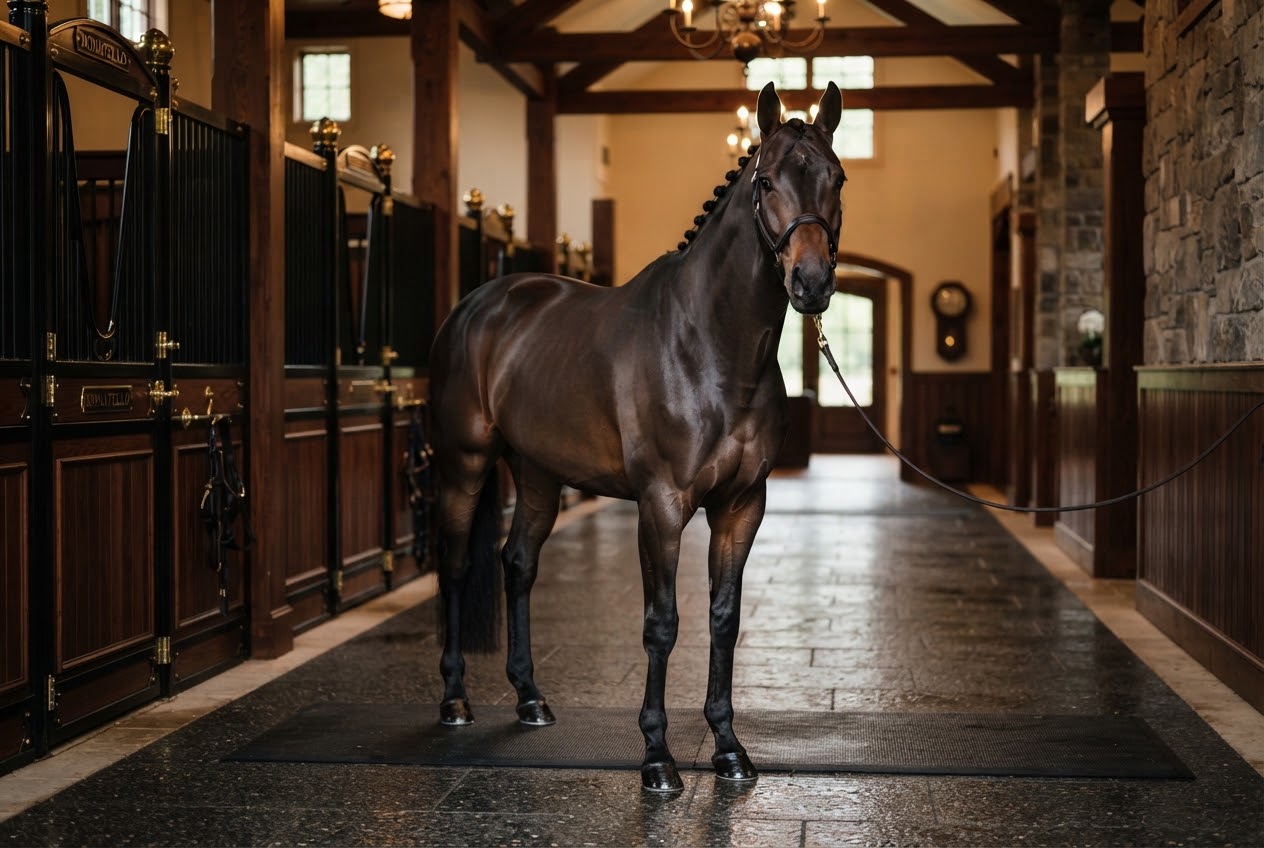
First, observe the horse in the stable
The first impression does not begin under saddle, but in the stable.
For example, pay attention to:
How does the horse react when you enter the stable? Is it curious and relaxed? Does it stand calmly on all four legs? Does its coat look healthy? Are its eyes clear and alert? Does the horse appear well-groomed?
A relaxed horse with an open demeanor often gives a good first impression of its character.
Have the owner ride first
Always ask the current owner or rider to ride the horse first.
This allows you to see:
How the horse is normally presented. How it reacts to the aids. Whether it remains relaxed during work. How easily the different exercises are performed.
Pay special attention to the harmony between horse and rider. A well-trained dressage horse appears relaxed, moves in a consistent rhythm, and remains focused.
Ride the horse yourself
Only after you have seen the horse ridden is it time to get on yourself.
Don't try to perform difficult exercises immediately. Focus on the basics first.
Ask yourself:
Does the horse feel honest? Does it react well to light aids? Is the tempo pleasant? Do I feel safe? Does this horse suit my riding style?
A horse doesn't have to be perfect, but it must inspire confidence.
How do you assess rideability?
Rideability is one of the most important qualities of a dressage horse. Even a horse with exceptional gaits will provide less pleasure if it is difficult to ride.
A good dressage horse:
Is light to the aids. Remains relaxed. Allows itself to be easily given. Is easy to steer. Remains balanced during transitions. Reacts honestly to corrections.
For most riders, a horse that is pleasant to ride is ultimately more valuable than a horse with extremely flashy movement but a difficult temperament.
Important questions for the seller
A professional seller will be open and transparent about the horse's history.
For example, ask about:
The reason for sale. The current training schedule. Competition experience. Any injuries. Medical treatments. Strengths and weaknesses. Behavior during transport. Behavior with the farrier. Experience outside its home stable.
The more complete the information, the better you can assess whether the horse suits you.
Health and maintenance
Besides talent, health plays a decisive role.
Always ask about:
Vaccinations. Deworming schedule. Dental check-ups. Hoof care. Physiotherapy or osteopathy. Any medication use.
A well-maintained horse shows that the owner pays attention to welfare and management.
The pre-purchase examination
Do you have a good feeling about the horse? Then an independent pre-purchase examination is the next step.
During a pre-purchase examination, a veterinarian examines, among other things:
Heart and lungs. Eyes. Musculoskeletal system. Joints. Legs. General health.
Depending on the age, value, and athletic ambitions, additional X-rays are often taken.
A pre-purchase examination does not guarantee the future but helps to make an informed decision.
Buying dressage horses abroad
More and more riders are looking across borders in their search for a dressage horse. Countries like the Netherlands, Germany, Belgium, and Denmark have an excellent international reputation in dressage breeding.
By searching internationally, you benefit from:
A larger selection. More diverse bloodlines. Horses in various price ranges. Access to professional breeders and trainers.
Thanks to specialized platforms, it is easier than ever to compare horses from different countries.
Why choose Avante Horse Sales?
At Avante Horse Sales, we bring ambitious riders and professional sellers together on one international platform.
We believe that a good purchase starts with transparency. That's why sellers present their horses with extensive information, professional photos, and videos, so buyers get a clear picture beforehand.
Through Avante Horse Sales, you can easily search for:
Young dressage horses. Experienced competition horses. Horses for amateurs. Dressage horses for higher-level sport. International dressage talents.
Our platform makes it possible to quickly and clearly compare horses from different countries and contact the seller directly.
Common mistakes when buying a dressage horse
Even experienced riders sometimes make mistakes during the purchasing process.
The most common are:
Only looking at spectacular movements. Buying a horse that doesn't match one's own level. Not having an independent pre-purchase examination performed. Paying too little attention to character. Making a decision based on one video. Allowing oneself to be rushed by time pressure.
A well-considered purchase may take a little more time but increases the chance of years of enjoyment and athletic success.
Bloodlines: The basis of future athletic success
Within international dressage sport, genetics play an important role. Although a good pedigree is never a guarantee of success, it does provide valuable information about a horse's aptitude, trainability, and athletic potential.
Professional riders, investors, and renowned training stables therefore look beyond just the horse's own performance. The sport results of parents, grandparents, and the dam line are also carefully analyzed.
A strong dam line, combined with proven stallions, increases the chance of a horse possessing the qualities needed for higher-level dressage.
Known dressage bloodlines
Europe has several bloodlines that have amply proven their worth in the international dressage arena. Within the KWPN, Hannoveraner, Oldenburger, and Danish Warmblood studbooks, there are stallions that have produced successful sport horses for generations.
When assessing a pedigree, attention is paid to:
sport performance of the parents; performance of siblings; quality of the dam line; longevity in the sport; character and temperament; health and resilience.
For professional buyers, this information forms an important part of the selection process.
Training level and development potential
A horse is not solely judged on the level at which it performs today. At least as important is the question of how much room there is for further development.
A five-year-old horse that has been correctly trained, is light to the aids, and possesses natural balance may be more interesting in the long term than an older horse that has already reached its maximum level.
Professional trainers therefore not only assess what a horse shows but, more importantly, what it could become in the future.
Important points of attention are:
natural aptitude for collection; ability to bring weight onto the hindquarters; balance in all three gaits; mental attitude; learning ability; willingness to work.
These qualities often determine whether a horse can make the step to the higher levels.
Longevity as a selection criterion
International dressage sport demands a lot from a horse. That is why longevity is becoming increasingly important.
A horse with exceptional movements has little value if it is physically or mentally insufficiently resilient.
Professional buyers therefore pay close attention to:
correct conformation; strong hooves; healthy joints; functional musculature; regular veterinary checks; responsible training management.
A sustainable sports career begins with a horse that is physically and mentally balanced.
The role of the trainer
When purchasing a dressage horse, independent advice is of great value.
An experienced trainer looks objectively at aspects that are easily overlooked during a first viewing.
Consider, for example:
quality of basic training; reaction to new aids; natural balance; relaxation during work; opportunities for further development.
Especially with horses in the higher price segment, expert advice can make the difference between a good purchase and an exceptional investment.
Investing in quality
For many buyers, a dressage horse is more than a sport partner. It is an investment in athletic ambitions and, in some cases, also in future market value.
Factors influencing value development include:
proven bloodlines; age; training level; health; competition results; international interest.
Horses that successfully develop in national or international sport can significantly increase their market value. This makes careful selection at the beginning of the process all the more important.
Why international buyers choose Europe
Europe is globally regarded as the center of modern dressage breeding. Countries like the Netherlands, Germany, Denmark, and Belgium have a long tradition of high-quality breeding programs, professional trainers, and successful sport stables.
For international buyers, this means access to an exceptional selection of horses with proven genetics and quality training.
Thanks to specialized platforms, it is easier than ever to compare this selection internationally and directly contact renowned sellers.
Avante Horse Sales: Quality without compromise
At Avante Horse Sales, quality is central.
Our platform focuses on carefully selected dressage, show jumping, and eventing horses for ambitious riders, professional stables, and international buyers looking for exceptional quality.
We believe that a premium presentation starts with full transparency. That's why horses on our platform are given the space to present themselves optimally with professional photography, high-quality videos, and extensive information about bloodlines, training, and performance.
This creates an environment where buyers can confidently search for their next sport partner and sellers can present their horses to an international audience that appreciates quality.
Frequently Asked Questions about Buying Dressage Horses What does a dressage horse cost?
The value of a dressage horse is determined by a combination of factors, including age, bloodlines, training level, health, competition results, and future sport potential.
Within the higher segment of the international sport horse market, the focus is not exclusively on current performance, but especially on the quality of the complete package. A horse with proven bloodlines, correct training, and potential for higher-level sport often represents a significantly higher value than a comparable horse without these qualities.
Is a young dressage prospect a good investment?
For many ambitious riders and professional stables, a young dressage horse with exceptional aptitude is an interesting investment. Provided it is correctly trained, a talented young horse can develop into a successful sport partner and increase in value.
However, a successful investment always begins with an objective assessment of conformation, movement, character, health, and genetic background.
What age is ideal?
There is no single answer to that.
A four- or five-year-old offers maximum development opportunities, while a horse of eight to ten years has often already proven to possess the desired qualities.
The right choice depends on your goals, experience, and the stage of your athletic career.
How important are bloodlines?
Bloodlines are an important part of the assessment but should never be viewed in isolation from the horse itself.
Professional buyers not only analyze the sire line but pay at least as much attention to the dam line, the performance of related horses, and the overall quality of the family.
A strong genetic basis increases the chance of athletic success, but training, management, and the right combination with the rider remain at least as decisive.
Why are more and more international buyers choosing Europe?
Europe boasts some of the most successful dressage breeding in the world. The Netherlands, Germany, Denmark, and Belgium have been supplying horses that perform at the highest international level for years.
By gaining direct access to this market, buyers benefit from a wide selection, high-quality breeding, and professional training stables.
The international market for dressage horses
The demand for high-quality dressage horses continues to grow worldwide. Not only professional riders but also investors, training stables, and ambitious amateurs are searching internationally for horses of exceptional quality.
As a result, the market has become more transparent and international. Digital platforms make it possible to compare horses from different countries before a viewing is scheduled.
For sellers, this means a global reach. For buyers, it creates access to a carefully selected offering that was previously often only accessible through personal networks.
Precisely for this reason, trust is more important than ever. Professional presentation, transparent information, and clear communication form the basis for a successful international purchase.
Why choose Avante Horse Sales?
At Avante Horse Sales, we believe that exceptional sport horses deserve a platform that radiates the same quality.
We focus on the international market for premium sport horses and bring together renowned breeders, professional training stables, and ambitious riders.
Our platform distinguishes itself through:
An international selection of high-quality sport horses. Professional presentations with high-quality photography and video. Transparent information about bloodlines, training, and performance. Direct contact between buyer and seller. An exclusive focus on quality over quantity.
Whether you are looking for a promising young talent or a proven dressage horse for higher-level sport, Avante Horse Sales offers an environment where quality, trust, and professionalism are central.
Conclusion
Buying a dressage horse is an investment in the future. The right choice is determined not only by impressive movements or a famous pedigree but by the balance between talent, health, character, training, and development potential.
Those willing to look beyond the first impression and assess the complete picture increase the chance of a long-term and successful partnership.
In an international market where quality is increasingly important, a specialized platform offers the opportunity to discover carefully selected horses from different countries and to directly contact professional sellers.
At Avante Horse Sales, we combine an exclusive international offering with transparency and expertise. This is how we help ambitious riders and professionals find a sport partner that not only impresses today but is also ready for the future.